Printed circuit assembly services
Reflow profiling is a critical aspect of printed circuit assembly services that plays a crucial role in optimizing soldering processes and ensuring the quality and reliability of electronic assemblies. Reflow profiling involves the precise control and monitoring of temperature profiles during the reflow soldering process, which is used to solder surface-mount components to printed circuit boards (PCBs). By carefully controlling the temperature ramp-up, soak, and cool-down phases of the reflow process, manufacturers can achieve consistent and reliable solder joints, minimize defects, and improve overall product quality.
One of the key benefits of reflow profiling is its ability to ensure proper wetting and reflow of solder paste, which is essential for forming strong and reliable solder joints between components and PCBs. Solder paste consists of tiny balls of solder suspended in a flux medium, which is applied to the pads on the surface of the PCB before components are placed. During the reflow process, the solder paste undergoes a phase transition from a solid to a liquid state, allowing it to flow and bond with the component leads and PCB pads. Reflow profiling allows manufacturers to optimize the temperature and heating rates to ensure that the solder paste melts and reflows uniformly across the entire assembly, minimizing the risk of defects such as insufficient soldering, solder bridges, or voids.
Moreover, reflow profiling helps to minimize thermal stress on electronic components and PCBs, reducing the risk of damage or reliability issues during the soldering process. Rapid temperature changes or excessive heating can cause thermal shock, warpage, or delamination of components and printed circuit assembly services, leading to defects or failures in the finished product. By carefully controlling the temperature ramp-up and cool-down rates, as well as the duration of the soak phase, reflow profiling helps to minimize thermal gradients and ensure gradual and uniform heating and cooling, reducing the risk of thermal stress-related defects and ensuring the long-term reliability of electronic assemblies.
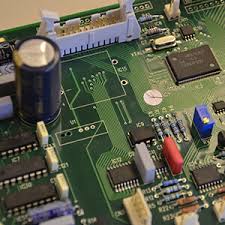
How does reflow profiling optimize soldering in Printed circuit assembly services?
Additionally, reflow profiling enables manufacturers to optimize the soldering process for specific component types, package sizes, and assembly configurations, ensuring optimal solder joint formation and performance. Different components and packages may require different temperature profiles to achieve proper wetting and reflow, depending on factors such as thermal mass, thermal conductivity, and solderability. Reflow profiling allows manufacturers to tailor the temperature profiles to the specific requirements of each assembly, ensuring consistent soldering quality and reliability across different product lines and applications.
Furthermore, reflow profiling helps to minimize the occurrence of defects such as solder voids, which can compromise the electrical and mechanical performance of solder joints. Solder voids are trapped pockets of gas or flux residues within the solder joint, which can weaken the joint and lead to reliability issues such as poor electrical connectivity, mechanical failure, or susceptibility to thermal cycling. By optimizing the reflow profile to promote proper flux activation and outgassing, manufacturers can reduce the formation of solder voids and ensure the integrity and reliability of solder joints in printed circuit assemblies.
In conclusion, reflow profiling is a critical aspect of printed circuit assembly services that optimizes soldering processes, ensures consistent solder joint quality, and enhances the reliability and performance of electronic assemblies. By carefully controlling temperature profiles during the reflow process, manufacturers can achieve proper wetting and reflow of solder paste, minimize thermal stress on components and PCBs, optimize soldering for specific component types and configurations, and minimize the occurrence of defects such as solder voids. As electronic devices continue to evolve in complexity and miniaturization, the importance of reflow profiling in printed circuit assembly services will only continue to grow, making it an indispensable tool for manufacturers seeking to deliver high-quality and reliable products.