Test AI Voice Agents for Different Accents
Testing AI voice agents for different accents is essential to ensure they can understand and respond accurately to users from diverse linguistic backgrounds. Accents vary widely, even within the same language, affecting pronunciation, intonation, and speech rhythm. If an AI voice agent is not trained and tested adequately across various accents, it may struggle to recognize words correctly, leading to a poor user experience. To create a truly inclusive and effective AI voice agent, developers follow systematic testing processes that involve diverse datasets, user simulations, and performance evaluations.
The first step in testing AI voice agents for different accents is collecting diverse speech datasets. These datasets should include recordings of native and non-native speakers with a wide range of accents, covering different regions and dialects. For example, an English-speaking AI should be tested with speakers from the United States, the United Kingdom, Australia, India, and other English-speaking countries. Similarly, a Spanish-speaking AI must recognize variations from Spain, Mexico, Argentina, and other Spanish-speaking regions. These datasets are used to train and evaluate the AI model to ensure it can handle diverse speech patterns.
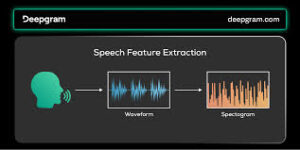
Once the datasets are prepared, AI voice agents are tested using Automatic Speech Recognition (ASR) models to measure their ability to transcribe and understand speech accurately. One of the key metrics used in this evaluation is the Word Error Rate (WER), which calculates the percentage of words incorrectly transcribed by the AI. A high WER for a specific accent indicates that the model struggles with that particular speech pattern. To address this, developers refine the AI by retraining it with more accent-specific data and improving language models to enhance recognition accuracy.
How Do You Test AI Voice Agents for Different Accents?
Simulated user interactions play a crucial role in accent testing. Developers create test scenarios where AI voice agents engage in conversations with users speaking different accents. These tests assess how well the AI understands spoken commands, follows context, and generates appropriate responses. The performance is measured using metrics such as response accuracy, latency, and user satisfaction scores. In some cases, developers use voice cloning or text-to-speech (TTS) technologies to generate synthetic speech samples representing different accents, allowing for scalable and automated testing.
Real-world testing is another essential aspect of evaluating Automated Al voice agent evaluation and benchmarking for accent diversity. This involves deploying the AI in real user environments and collecting feedback from individuals with various accents. User feedback helps identify specific pronunciation challenges and common errors, allowing developers to fine-tune the model further. Crowdsourcing platforms and beta testing programs are often used to gather real-world speech data from diverse speakers, ensuring that the AI performs well across different demographic groups.
In addition to improving AI models, developers also use accent adaptation techniques such as transfer learning and dialect modeling. Transfer learning allows the AI to learn from one accent and apply the knowledge to recognize similar speech patterns. Dialect modeling helps the AI differentiate between regional variations, improving its ability to interpret speech correctly. These techniques enhance the AI’s adaptability, making it more inclusive and effective for global users.
In conclusion, testing AI voice agents for different accents involves collecting diverse speech datasets, evaluating ASR performance, simulating user interactions, conducting real-world testing, and applying advanced adaptation techniques. Ensuring accent diversity in AI voice agents is crucial for providing an inclusive and accurate user experience. As AI technology continues to evolve, ongoing testing and refinement will play a key role in improving speech recognition across all accents and dialects.