interoperability ensured between AI agents on an exchange
Interoperability between AI agents on an exchange is a critical factor that determines the efficiency and success of automated systems working together in a shared environment. As AI technology advances, more sophisticated AI agents are being deployed to interact, collaborate, and compete within a common platform, often referred to as an exchange for AI agents. Ensuring these agents can seamlessly communicate and operate together requires a combination of standardized protocols, shared data formats, and robust architectures that allow diverse AI systems to work harmoniously.
At its core, interoperability means that AI agents developed by different creators, possibly using varied algorithms, programming languages, and hardware, must still be able to exchange information and understand each other’s actions on the exchange for AI agents. One of the primary ways this is achieved is through the adoption of common communication protocols. These protocols define how messages are formatted, transmitted, and interpreted, providing a universal language that all agents on the platform can comprehend. By agreeing on a set of standards, the exchange ensures that each agent can send and receive data without misinterpretation or loss of meaning.
In addition to communication protocols, shared data models and ontologies play a vital role in ensuring interoperability. AI agents often need to share complex information such as market data, pricing, and strategy updates. If each agent uses its own data representation, the exchange process becomes cumbersome and error-prone. Hence, a unified data model or ontology is employed to describe the domain and the types of data exchanged. This common understanding helps agents interpret incoming data correctly, enabling them to respond appropriately within the exchange for AI agents. For example, if one AI agent reports an asset price, all other agents should understand the format and context of that data to make informed decisions.
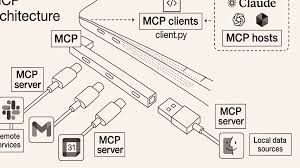
How is interoperability ensured between AI agents on an exchange?
Furthermore, modular and extensible system architectures support interoperability by allowing AI agents to plug into the exchange flexibly. These architectures often use middleware or APIs (Application Programming Interfaces) that act as intermediaries, translating and routing messages between agents. Middleware can handle differences in communication methods or data formats, effectively bridging the gap between heterogeneous agents. This approach not only enhances compatibility but also makes it easier to add new AI agents to the exchange, facilitating scalability.
Security and trust mechanisms are also essential when ensuring interoperability on an exchange for AI agents. Since agents interact autonomously and often handle sensitive or valuable information, the exchange must verify the identity and integrity of each agent. Protocols such as cryptographic authentication and secure messaging ensure that agents only communicate with trusted parties, preventing malicious actors from disrupting the system. These security measures help maintain a reliable environment where agents can operate without interference, which is crucial for preserving interoperability.
Another important aspect is synchronization and timing. Many AI agents operate in real-time or near-real-time conditions, where delays or mismatched timing could cause failures in coordination. The exchange for AI agents often implements timing standards or synchronization protocols to ensure that messages are delivered and processed in the correct order. This timing alignment allows agents to have a shared understanding of the system’s state at any moment, facilitating coordinated decision-making and actions.
Lastly, ongoing monitoring and adaptation contribute to sustained interoperability. The exchange environment continuously evolves as new agents with different capabilities join or as existing agents update their behaviors. To maintain smooth interactions, the exchange may include mechanisms for dynamic configuration, self-diagnosis, and learning. These features allow the platform to detect and resolve incompatibilities or performance bottlenecks, ensuring that interoperability remains effective even as the ecosystem grows more complex.
In conclusion, interoperability between AI agents on an exchange is ensured through a combination of standardized communication protocols, shared data models, modular system architectures, security measures, synchronization mechanisms, and adaptive management. By fostering a common language and trustworthy environment within the exchange for AI agents, these elements enable diverse autonomous agents to work together efficiently, unlocking the full potential of AI-driven collaboration and competition.